

The Alchemy of Rust and Silk: An Interview with Jane Doe
The studio smells of cedarwood and damp paper. Jane Doe sits across from me, her fingers faintly stained with Indigo Blue. On her desk lies a half-finished illustration for Vogue—a mechanical watch movement dissolving into a bouquet of peonies.
We sat down to discuss her journey from the gritty docks of her youth to the high-fashion runways of Milan.
Interviewer:Jane, you’ve often said your aesthetic was born in a place most people would find ugly. Can you take us back to those early days?
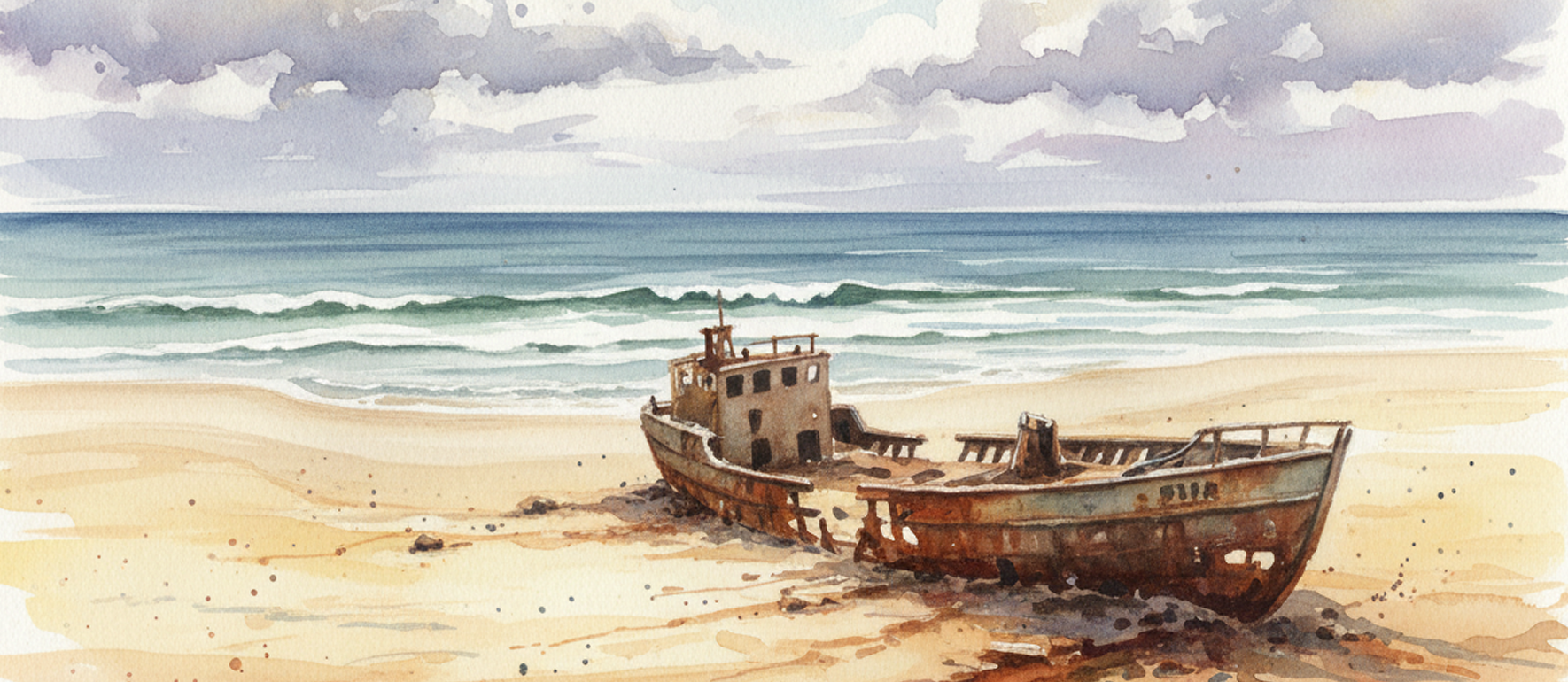
Jane Doe:I grew up near a decommissioned shipyard. I used to watch the tide come in and slowly reclaim these massive, steel skeletons. It taught me that nothing is truly static. I want to bridge the gap between the "cold" machine and the "warm" pulse of life. To me, a rusted bolt has as much a story to tell as a fallen leaf.
Interviewer:How did those "steel skeletons" translate into your teenage sketchbooks? Most teens are drawing pop stars, but you were drawing... tankers?
Jane Doe:(Laughs) Exactly. My peers were sketching celebrities, and I was obsessed with the way saltwater ate through iron. I spent my teens trying to replicate that specific texture. I realized that watercolor was the only medium that could do it justice. It’s an unpredictable medium; you have to surrender some control to the water, much like the shipyard surrendered to the sea.
By seventeen, I wasn’t just drawing machines; I was drawing them as if they were breathing. I’d paint an engine block but give it the anatomical curves of a human torso. That was my first real "click" moment.
Interviewer:That transition from industrial grit to the polished world of fashion and magazines seems like a massive leap. How did you bridge that gap?
Jane Doe:It felt like a leap at the time, but the core is the same: structure vs. fluidity. In my early twenties, I moved to the city and started illustrating for indie tech mags. They loved the "human" touch I gave to cold hardware. But then, a creative director at a fashion house saw a piece I’d done of a rusted crane and said, "The way you layered those oranges and browns... that’s exactly the drape of our new autumnal silk." I realized that a silk gown caught in the wind moves exactly like oil on water or smoke from a factory chimney. Fashion is just another way of exploring how form interacts with the environment.
Interviewer:Your work is now iconic in Harper’s Bazaar and The New Yorker. You’ve made "industrial watercolor" a household term. Looking back, does the fame feel "static"?
Jane Doe:Never. The moment I feel "established" is the moment I stop growing. I still go back to that shipyard once a year. The skeletons are smaller now—the sea has taken more of them. It reminds me that my art should always be in a state of flux. Whether I’m painting a $10,000 handbag or a discarded wrench, I’m looking for the heartbeat in the object.